Reviewed: 20 August 2026 · Written by Jay Jung
Gas versus electric at home is not one product swap. The Australian Government describes electrification as replacing products and appliances that use non-electric fuels, such as gas or petrol, with electric technologies. The same page is explicit that many electric home appliances are more energy efficient than gas appliances: they use less energy to do the same task and cost less to run. An average household can cut energy costs by hundreds to thousands of dollars a year by electrifying, depending on energy use.
That range is a national summary, not a quote for your house. This guide is about the three household jobs that still burn gas in many Australian homes — space heating, hot water and cooking — and about the separate decision to keep paying a gas supply charge after those jobs have moved.
It does not replace our hot-water system guide, which owns storage, heat pumps and solar water heaters in detail. It does not replace our reverse-cycle winter heating guide, which owns how to run a heat-pump heater through a cold evening. Those pages stay the owners of their jobs. Come here for the cross-fuel choice and for whether leftover gas is still worth keeping.
What this comparison actually decides
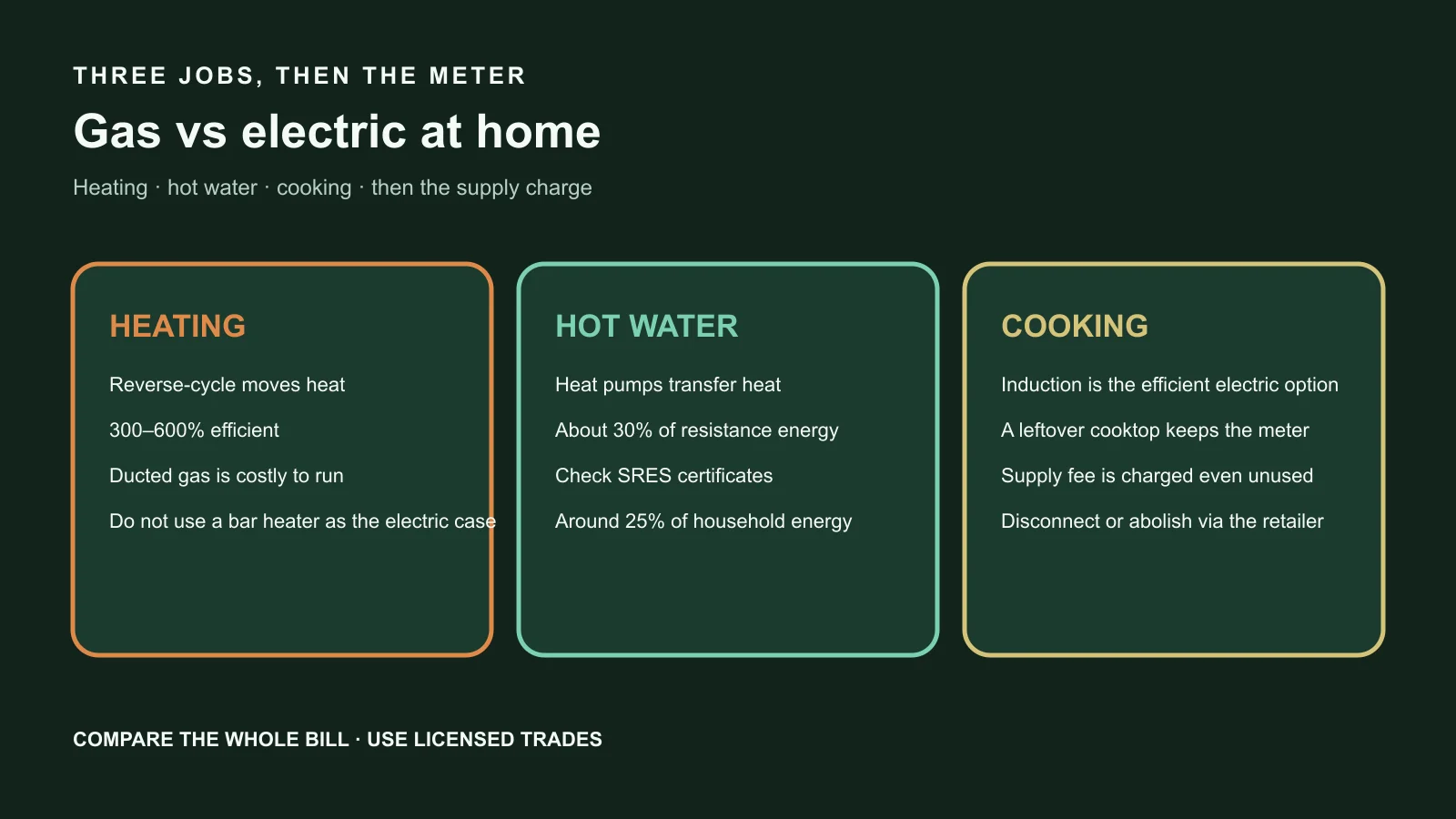
A gas appliance and an electric appliance can both heat a room, heat water or cook dinner. They are not the same product. Gas burns a fuel on site. Reverse-cycle air conditioners and heat-pump water heaters move heat rather than make it. The official heating page says reverse-cycle air conditioners on the Australian market range between three hundred and six hundred percent efficient because they transfer heat instead of generating it. Electric resistance heaters, by contrast, turn one unit of electrical energy into one unit of heat.
So electric is not one efficiency class. Induction cooktops, heat-pump water heaters and reverse-cycle air conditioners sit in a different group from a cheap bar heater. If you replace a ducted gas heater with a portable resistance heater, you have not made the swap the electrification page is describing.
The official electrification page lists other reasons besides the bill: all-electric homes generally produce less emissions than those that use gas, and there are health benefits from fewer fumes and chemicals released indoors. Those are government statements, not a promise that your renovation will raise sale price by a stated amount.
Our home energy guide is the hub for this cluster. This page only compares fuels across the three jobs and then asks whether the gas meter should stay.
The three jobs in the house
The electrification page names three main areas where you can electrify: hot water, heating and cooling, and cooking appliances. Heating and cooling can account for twenty to fifty percent of energy used in Australian homes, depending on climate zone. Hot water is responsible for around twenty-five percent of an average household’s energy use on that page. The dedicated hot-water page puts water heating as the second-largest segment of household energy use, ranging from fifteen to thirty percent, and as a large source of greenhouse gas emissions from an average Australian home.
Cooking is a smaller share. The appliances page still treats cooktops as a real switch, because induction is faster and cheaper to operate than gas stoves or conventional electric hotplates, and because a leftover gas cooktop is often the last load that keeps a supply charge alive.
The official planning advice is not to electrify everything at once. Gas water heaters usually last twelve to fifteen years. Cooktops can last from fifteen to twenty years. End of life is a planned replacement window. The same page says to consider replacing the appliances that use the most gas first. In most houses that is the heating system.
Space heating: why reverse-cycle usually beats gas
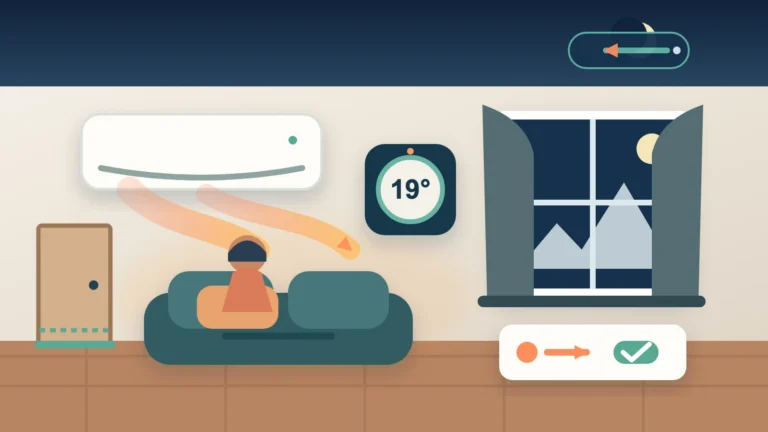
The electrification page prefers electric reverse-cycle split-system air conditioners as replacements for gas heaters. They are more energy efficient, cheaper to run, and can heat or cool depending on the weather. This type of air conditioner does not use electrical power to generate heating or cooling. It uses power to transfer heat.
The heating-and-cooling page is more specific. Reverse-cycle air conditioners take one unit of electrical energy and turn it into three to six times as much heating or cooling energy. Split systems have an exterior compressor and an interior unit. Ducted reverse-cycle systems are not as efficient as wall units, because a larger fan is used and energy is lost through ductwork, which makes them more expensive to run. The same page still says ducted systems are more cost-efficient than gas heating.
Ducted gas heating is described as expensive to operate due to significant gas consumption and electricity for the fans. Purchase, installation and running costs can be costly. Zoning to used rooms helps, but it does not change the fuel. Gas heaters lose heat through the flue, or through open windows for unflued products. They also use electricity for fans and other components, so a gas running-cost comparison that ignores that electricity is incomplete.
Unflued portable gas heaters are a safety object, not a cheap winter hack. Some states and territories have banned or restricted them. They emit carbon monoxide, nitrogen dioxide and water vapour while burning the room’s oxygen. New South Wales Health publishes a warning. Open-flued heaters also need fixed ventilation. Do not treat a blog table as a licence to run an unflued heater in a sealed bedroom.
Electric resistance heaters convert electrical energy to heat one-for-one. That is still a different product from a reverse-cycle unit that moves three to six units of heat. A bar heater can make sense for a short burst in a small space. It is a poor whole-house replacement for ducted gas.
How to size, place and run a reverse-cycle unit through winter belongs in the reverse-cycle heating guide. This page only answers whether gas or a heat pump is the heating fuel. Each extra degree of heating in winter or cooling in summer increases energy use between five and ten percent. That thermostat fact is independent of fuel, and it is often a cheaper first move than a new appliance.
Hot water: heat pump versus gas versus resistance
Switching from gas to electric water heaters can significantly reduce energy bills and greenhouse gas emissions, according to the electrification page. The most common electric systems are heat pumps and conventional electric resistance heaters. Heat pumps are the cheapest system to run. They use electricity to transfer heat rather than heat the water, and they use thirty percent of the energy of a conventional electric hot water system.
That thirty percent figure is relative to electric resistance storage. It is not a guaranteed saving against your particular gas instantaneous unit. Heat pumps can be expensive to buy and install. The official page tells households to look at rebates and assistance, and at the Small-scale Renewable Energy Scheme, which can lower upfront cost through small-scale technology certificates if you meet Clean Energy Regulator rules for solar water heaters and air-source heat pumps.
Heat pumps may not suit apartments with little outdoor or plant-room space. Gas hot water heaters are usually installed outdoors because of venting requirements. The hot-water page describes them as medium-to-high purchase, installation and running costs. It does not publish a single national figure you can copy onto a quote.
Off-peak electric storage can reduce bills by heating water in a cheaper window, but only on some electric systems and with some retailers. Confirm that with the retailer before you treat off-peak as part of a gas-to-electric saving. The detailed choice among heat pump, solar water heater, instantaneous and storage belongs in the hot-water system guide.
Cooktops: induction versus gas
To switch cooking to electricity you can choose electric hotplates or induction cooktops. The official page says induction cooktops are fast and cheaper to operate than gas stoves or conventional electric hotplates. The appliances page adds indoor air quality and the gas connection fee as reasons to consider an efficient electric alternative when a gas stovetop or oven reaches replacement.
Cooking is a small share of household energy compared with heating and hot water. It still matters because a leftover gas cooktop can be the only reason the gas meter, and the gas supply charge, stay in the house. A library loan of a portable induction plate is a cooking trial. It does not disconnect the meter.
The standing charge is part of the price
A household that has moved heating and hot water to electricity, but kept a gas cooktop for weekend cooking, is still a gas customer. The electrification page is blunt about the last step: you will be charged for disconnection or abolishment, but you no longer pay a gas supply fee. The supply fee is the cost of being connected to the gas network, charged whether you use gas appliances or not.
That is why a running-cost comparison that only looks at cents per megajoule versus cents per kilowatt-hour can mislead. If the remaining gas load is a few hours of cooking a week, the standing charge can dominate the gas bill. Compare whole electricity plans on Energy Made Easy when the house becomes more electric. Usage shape changes when heating and hot water move onto the meter. Our electricity-plan comparison guide covers that bill. Do not assume the old electricity plan is still the right one after a fuel switch.
Disconnect or abolish
Only qualified professionals with specialist skills and equipment can halt gas supply. You should never attempt it yourself. In Australia it is illegal to do some electrical and gas work unless you are a qualified electrician or gasfitter. It can also be dangerous.
Two options generally exist, depending on state or territory. Disconnection is a temporary closure; the service can be restored later. Abolishment is a permanent disconnection and may not be available in an apartment because the infrastructure is shared. Contact the retailer, whose details are on the bill. You will be charged. Costs differ by retailer and location.
Renters are limited. Electrification is a decision for the person who owns the property. Renters can write to landlords requesting electric replacements. Rights vary by state and territory.
Gas versus electric checklist
- List every gas appliance: heating, hot water, cooktop, oven, outdoor.
- Note age against the official ranges: water heaters about twelve to fifteen years, cooktops fifteen to twenty.
- Treat the largest gas load first. In most houses that is heating.
- For heating, compare reverse-cycle heat-pump performance with gas. Do not use a resistance bar heater as the electric case.
- For hot water, compare a heat pump with gas, and check Clean Energy Regulator certificate support and the rebates directory.
- For cooking, treat induction as the official efficient electric option, not a coil hotplate.
- Recalculate the gas bill including the supply charge if only cooking would remain.
- Compare the new electricity usage pattern on Energy Made Easy.
- If you stop using gas, ask the retailer about disconnection versus abolishment. Do not do the work yourself.
- Recheck rebates on energy.gov.au before you pay a deposit, and use licensed gasfitters and electricians for the changeover.
Official sources
- energy.gov.au — Electrification
- energy.gov.au — Heating and cooling
- energy.gov.au — Hot water systems
- energy.gov.au — Appliances and cooking
- energy.gov.au — Rebates and assistance
- Energy Made Easy — Compare energy offers
- Clean Energy Regulator — Solar water heaters and air-source heat pumps
- NSW Health — Unflued gas heaters
Disclosure: Ezion Guide has no affiliate relationship with any energy retailer, network business, tradesperson, calculator or government body mentioned here. This general information does not guarantee any bill saving, payback, rebate, eligibility or safety outcome. Retailer offers, network charges, rebates, appliance rules and disconnection fees change. Confirm current details with your retailer, licensed trades and the relevant regulator.