Reviewed: 11 August 2026
Comparing electricity plans is easier when you treat it as a household-data exercise rather than a search for one universally “best” retailer. Your location, meter, tariff structure, electricity use, solar exports and contract conditions can all affect the result. A plan that looks suitable for one home may be a poor match for another, even in the same suburb.
This guide explains how to collect the right information, read comparison results and check a new plan after switching. It does not rank retailers or quote current prices. For appliance-level energy use, see our appliance running-cost guide. If your electricity setup includes connected meters, plugs or home-energy devices, our smart-device security guide covers practical digital-safety checks.
Start with the official comparison service for your state or territory
Households in New South Wales, Queensland, South Australia, Tasmania and the Australian Capital Territory can use Energy Made Easy. It is a free, independent Australian Government energy-comparison service operated by the Australian Energy Regulator. You can compare using information from a recent bill, a National Metering Identifier (NMI) and details about your electricity use. The plan information displayed by Energy Made Easy is supplied by energy retailers.
Victoria has a separate government comparison service, Victorian Energy Compare. Victorian households should use that service rather than assuming that an offer or benchmark described for another state applies to them.
Official comparison tools are the most useful starting point, but the result is still an estimate based on the information available. Read the plan details and retailer documents before agreeing to switch.
What to collect from your electricity bill
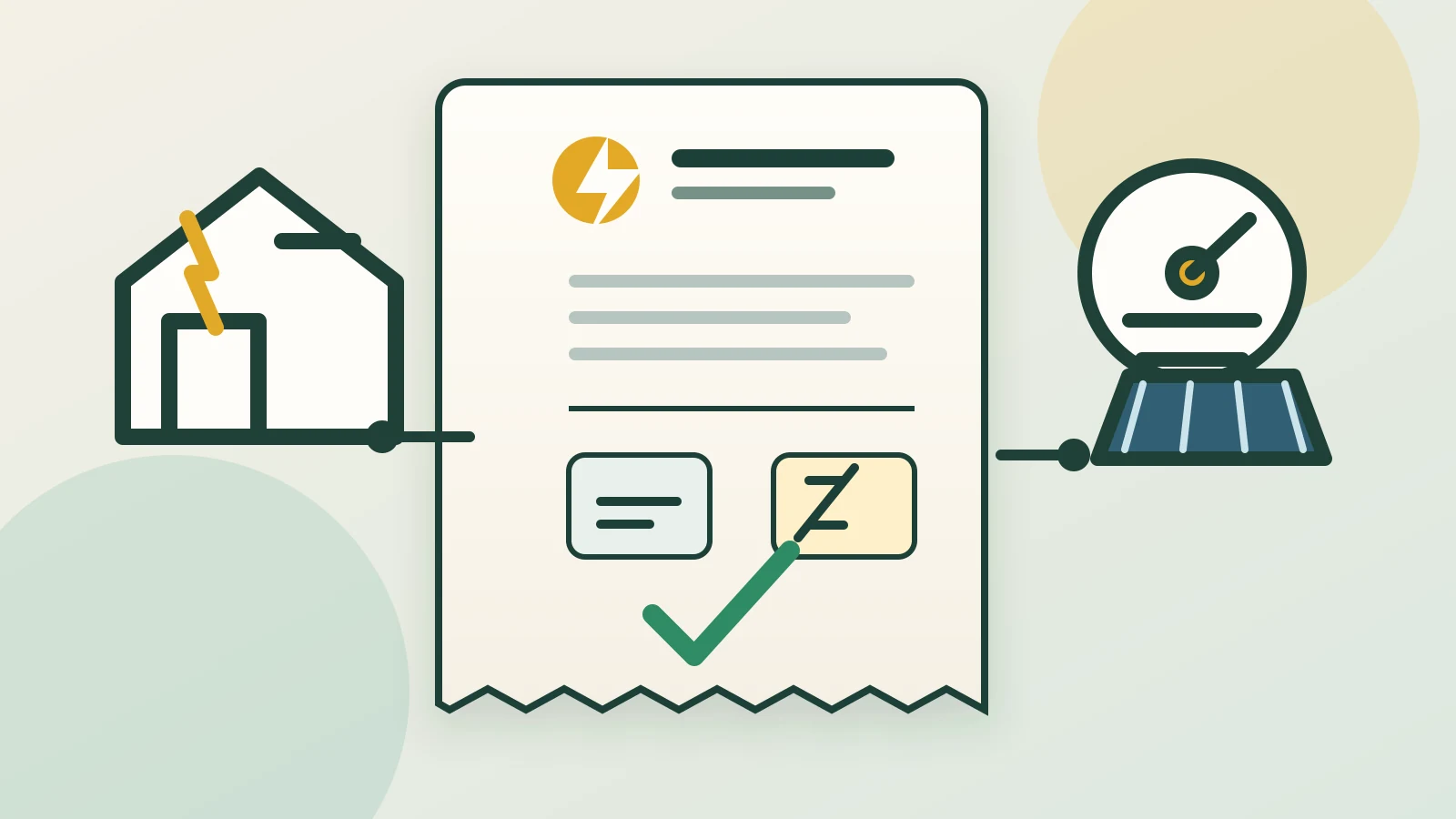
The Australian Energy Regulator explains that an energy bill contains information about both your electricity use and the service provided to your property. Have a recent bill ready before comparing. If possible, use a bill covering a representative period rather than an unusual month when the home was empty, full of visitors or using temporary heating or cooling.
- Supply address and postcode: These determine which plans and electricity network arrangements may be relevant.
- NMI: This identifies the electricity connection point. It is not the same as your retailer account number.
- Billing period: Note how many days the bill covers so that short and long billing cycles are not compared as though they were identical.
- Electricity usage: Record the usage shown for the period and, where available, the daily average or historical usage chart.
- Tariff or meter information: Check whether the bill separates peak, off-peak, shoulder, controlled-load or demand components.
- Solar exports: If the property has solar, record exported electricity and feed-in credits separately from electricity imported from the grid.
- Current discounts and credits: Identify whether they are ongoing, conditional, temporary or close to expiring.
- Fees and payment conditions: Look for payment-method requirements and other conditions that affect the total bill.
Do not rely only on the final amount due. Two bills with similar totals can reflect different usage, tariff structures, credits or billing periods. The underlying inputs are more useful when comparing plans.
Identify how your household is charged
A low-looking usage charge does not tell the whole story. First identify the tariff structure attached to the property and meter, because it determines which numbers you need for the comparison:
- Flat tariff — one usage rate at all hours. Only total consumption matters.
- Time-of-use — separate peak, shoulder and off-peak rates. When you use power matters as much as how much.
- Demand tariff — an additional charge based on the highest single period of usage, shown in kW rather than kWh.
- Controlled load — a separately recorded circuit for one appliance, commonly an eligible hot-water system.
Choosing between flat and time-of-use depends on the household’s daily pattern. Time-of-Use vs Flat Tariff works through it with interval data.
Compare the estimated annual cost, not one headline feature
Once your inputs are accurate, use the estimated annual cost as the main comparison starting point. An annual estimate brings the supply component, usage pattern and stated plan features into one view. It is generally more informative than selecting a plan because of one discount, one tariff line or a promotional message.
It is still an estimate, not a guaranteed future bill. Your actual result can change if household occupancy, weather-related use, appliance use, tariff periods, solar production or export patterns change. Check which usage assumptions the comparison tool has applied, especially if you entered a general household profile instead of bill or meter information.
Do not mistake the default-offer comparison figure for a forecast
In New South Wales, South Australia and south-east Queensland, the Default Market Offer (DMO) is a maximum price for standing offers and also provides a common comparison price for market offers. It is not necessarily the cheapest available offer.
The annual comparison price associated with the DMO uses benchmark electricity consumption. It is not a prediction of your actual annual bill. Use it to understand how an offer is presented against the regulated reference, then return to the estimate based on your own bill, meter data or usage profile.
Victoria uses the Victorian Default Offer (VDO) rather than the DMO. The Essential Services Commission explains that the VDO is not necessarily the cheapest offer, and it varies by electricity distribution zone. Victorian households should therefore compare offers through Victorian Energy Compare and confirm which distribution zone applies to the property.
Check discounts, conditions and fees
A discount is only useful if you understand what it applies to and whether you can reliably meet its conditions. Before shortlisting a plan, check:
- whether the discount is conditional or unconditional;
- whether it applies for a limited benefit period or continues;
- whether a particular payment method or billing arrangement is required;
- what happens when a benefit period ends;
- whether there are membership, paper-bill, payment or other relevant fees;
- whether rates or plan terms may change and how notice is provided; and
- whether the plan has any exit or contract conditions you need to understand.
Compare plans on the total estimated annual cost under conditions you can realistically maintain. Do not assume the largest advertised percentage creates the lowest household cost.
Solar households: separate imports from exports
If you have rooftop solar, compare the cost of electricity imported from the grid as well as the credits for electricity exported. A feed-in credit is one part of the bill, not the entire comparison.
Use recent bill or meter information where possible. Record how much electricity the household imports and exports rather than assuming that system size alone describes the household’s position. When reviewing results, check the feed-in arrangement, any eligibility conditions and how the estimated annual cost incorporates both imported electricity and export credits.
A plan with a more prominent solar feature is not automatically the best overall match. Higher import costs, supply components, conditions or fees can matter more than one credit line, depending on the household’s actual pattern.
A practical shortlist method
- Use the correct government comparator. Choose Energy Made Easy for participating states and territories, or Victorian Energy Compare for Victoria.
- Enter the strongest available data. Prefer a recent bill, NMI and actual usage information over a broad household guess.
- Confirm the tariff structure. Check flat, time-of-use, demand and controlled-load components before comparing totals.
- Sort or review by estimated annual cost. Use the estimate as the starting point, not as a guarantee.
- Shortlist a small number of suitable plans. Remove plans whose payment, billing or eligibility conditions do not suit the household.
- Read the detailed plan information. Confirm tariff structure, discounts, fees, solar credits, benefit periods and contract conditions.
- Save the comparison. Keep the date, estimate, plan name and relevant documents so you can check what you agreed to later.
Switching checklist
- Confirm the plan is available for the exact supply address and meter configuration.
- Review the estimated annual cost and its usage assumptions.
- Check discounts, fees, payment rules and benefit-period dates.
- For solar, confirm export-credit eligibility; a legacy feed-in rate may be lost.
- Read and keep the plan documents and acceptance confirmation.
Do not cancel the old account yourself. The complete transfer, final-read and double-billing checklist is in Switching Energy Retailers.
Verify the first bill after switching
The job is not finished when you accept the plan. Compare the first bill against the saved plan information and switch confirmation: address, dates, tariff categories, rates, discounts, solar credits, and whether the reading is actual or estimated.
If something does not match, contact the retailer with the saved comparison, plan documents and bill. The line-by-line checklist is in Switching Energy Retailers.
Final takeaway
The most reliable comparison is based on your own address, bill, meter and usage pattern. Use the appropriate government comparator, compare estimated annual costs, understand the tariff structure and read every condition that affects the total. Default-offer figures provide a reference point; they do not identify the cheapest plan or predict your future bill.
Disclosure: Ezion Guide has no affiliate relationship with the government services or regulators listed in this article. This general information does not provide financial advice, rank retailers, promise savings or guarantee that a particular plan will reduce your bills. Availability, eligibility, plan terms and household outcomes can change. Verify current details through the official comparison service and the retailer’s plan documents before making a decision.
Official sources
- Energy Made Easy — Australian Government energy comparison service
- Australian Energy Regulator — Your energy bill
- Australian Energy Regulator — The Default Market Offer
- Victorian Energy Compare
- Essential Services Commission — Victorian Default Offer
Part of Cut Your Australian Power Bill: Complete Home Energy Guide.