Reviewed: 16 August 2026 · Written by Jay Jung
Reverse-cycle air conditioning can be a practical way to heat an Australian home in winter. In heating mode, it works as an air-source heat pump: the system collects heat from outdoor air and transfers it indoors instead of turning each unit of electricity directly into one unit of resistance heat. That explains its efficiency advantage, but it does not prove that every household will save money.
Heating and cooling can represent roughly 20–50% of home energy use, depending on climate and the home. That broad range is not a forecast for your bill. Building fabric, floor area, occupancy, thermostat settings, system condition, local weather and tariff all change the result. This guide shows how to compare, size and operate a reverse-cycle system without converting general efficiency claims into guaranteed savings or suitability.
What “three to six units of heat” actually means
Australian Government guidance explains that an air conditioner can use one unit of electrical energy to transfer about 3–6 units of heating or cooling energy. This is an energy-output relationship, not a promise to cut a bill by a particular percentage. The realised ratio moves with outdoor temperature, defrost cycles, indoor set point, part-load operation, installation quality and equipment design.
A resistance heater converts electricity into heat at the point of use. A heat pump spends electricity moving existing heat. That mechanism can deliver more useful heat per unit of electricity, but the final cost still equals metered electricity multiplied by the rates applying when the system runs. A larger heated area, longer operating hours or a different tariff can outweigh an efficiency improvement.
Use our appliance running-cost guide to keep watts, kilowatt-hours and dollars separate. Compare the whole winter period where possible, not one unusually mild afternoon.
Start with the heating load, not the catalogue size
The right capacity is not determined by floor area alone. Ceiling height, insulation, glazing area and type, draughts, orientation, construction, neighbouring spaces, local design temperatures and how the rooms connect all affect the heating load. A unit that is too small may run hard without maintaining comfort on colder days. An oversized unit can cost more upfront, cycle poorly and create uneven temperatures.
Ask an experienced heating and cooling specialist for an onsite load assessment and calculation. Give them the rooms you actually intend to heat, typical occupancy, existing insulation and glazing details, and any planned building improvements. Treat online sizing tables as an initial check only. If a quote names capacity without explaining the load assumptions, ask for the calculation and cold-weather performance basis in writing.
Choose between a single split, multi-split and ducted system according to the occupied spaces and building constraints. A single split may suit one living area; a multi-split can serve several rooms; ducted equipment can cover a wider area but adds duct design and loss considerations. Whole-home coverage is not automatically the cheapest or most efficient option.
Read the Zoned Energy Rating Label in the right order
The Zoned Energy Rating Label separates Australia into hot, average and cold climate zones. Find the zone relevant to the installation location. Then compare systems with similar heating capacity and comparable features. Star ratings from unlike capacities are not a clean comparison: a larger appliance can use more electricity even when its star rating looks the same.
After checking capacity and zone, read the estimated annual heating energy in kilowatt-hours. For a simple personal estimate, multiply that annual kWh figure by your own electricity tariff. Keep the result labelled as an estimate because the label uses standard climate and usage assumptions. Your hours, thermostat, home and weather will differ. If a time-of-use plan applies, a single blended rate can conceal when winter heating actually occurs.
Our Energy Rating Label comparison guide explains capacity, stars and annual consumption. Our time-of-use versus flat-tariff guide helps select an appropriate rate instead of multiplying by a headline price that may not apply during heating hours.
Use 18–20°C as a practical winter starting point
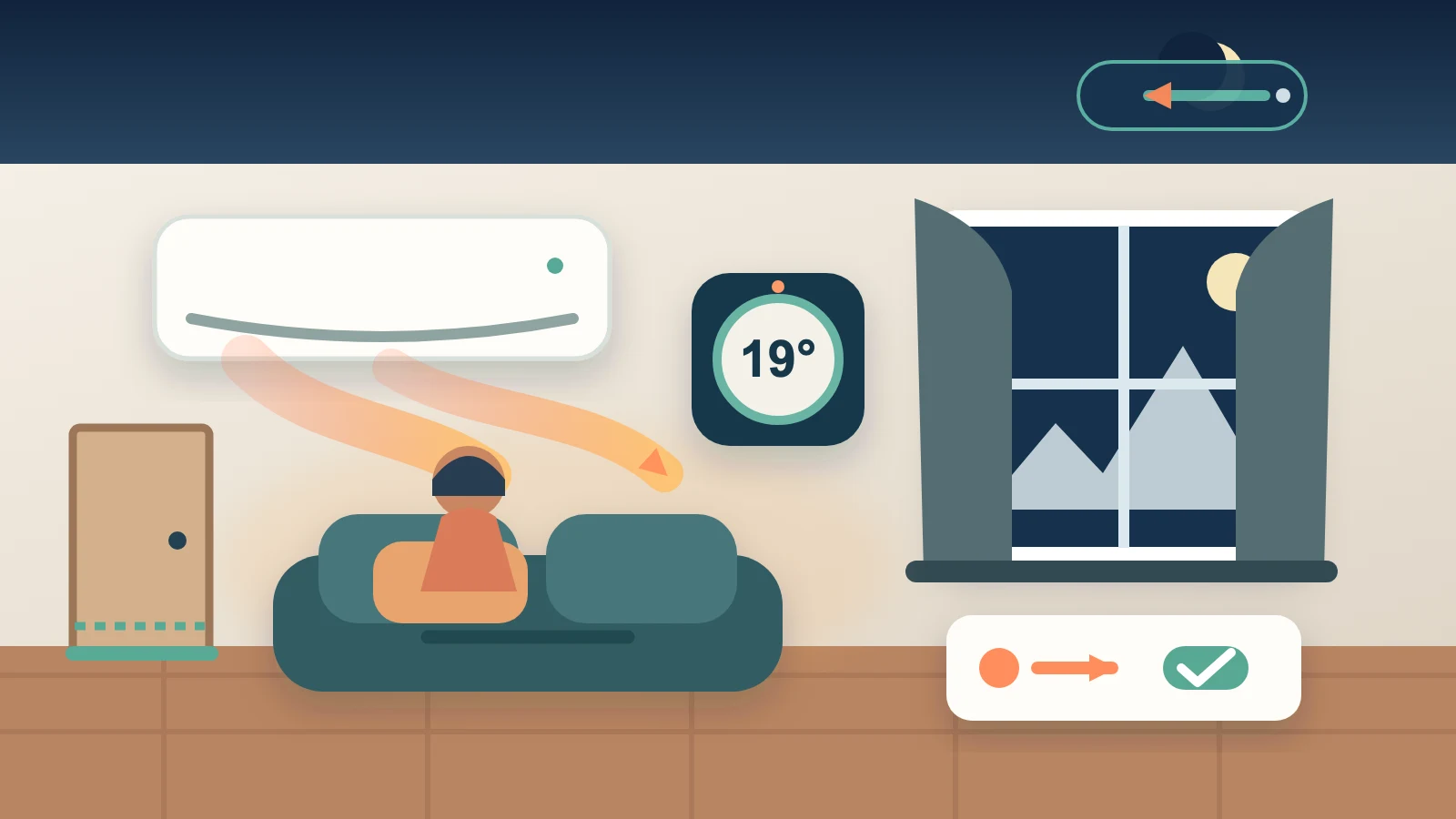
Australian Government winter guidance recommends setting heating between 18°C and 20°C. Health, age, clothing, activity and the people in the home may justify a different setting. Comfort and safety come first, especially for infants, older people and people with health conditions.
Government guidance also says each extra degree can add roughly 5–10% to heating energy use. That means energy used for heating, not 5–10% of the household’s total electricity bill. Do not apply the percentage to supply charges, hot water, cooking or other appliances. It is a directional operating guide, and the actual response depends on the building and system.
Warm the occupied space to a stable comfortable setting rather than repeatedly demanding extreme temperatures. Use timers or schedules around occupancy, but do not let the home reach an unsafe temperature. Turning a set point far above the target does not make the system manufacture heat faster; it can simply make it run longer.
Protect airflow before blaming the machine
Clean filters according to the manufacturer’s instructions. Keep indoor grilles, outdoor units and return-air paths unobstructed, and do not place furniture or curtains across the airflow. Restricted airflow can reduce performance and cause the unit to work harder. If the system develops unusual noise, ice, water leakage, persistent odour or repeated faults, stop guessing and arrange professional inspection.
Close curtains or insulated blinds before dark and open them for useful winter sun. Seal avoidable draughts around doors and windows without blocking required ventilation. These measures reduce the load the system must meet; they do not change its rated capacity. Addressing the building can improve comfort even when the appliance is already efficient.
Heat occupied rooms rather than every space by default. Close doors to unused rooms when that matches the system design. For ducted systems, use zoning only within installer and manufacturer requirements: closing too many outlets can affect airflow and pressure. The useful rule is occupied-room zoning, not indiscriminate vent closure.
Estimate the cost with your own evidence
First identify the relevant label’s annual heating kWh for your climate zone and similar capacity candidates. Multiply each by the import tariff that best represents your expected heating hours. Add any plan-specific demand charge carefully and keep daily supply charges separate because they may not change with appliance choice.
Then compare actual meter intervals before and after a controlled operating change. Match similar outdoor conditions and occupancy, record set point and hours, and allow for other large loads. One bill is often too noisy: billing-day count, tariff changes, estimated reads and seasonal hot-water use can move the total independently of heating.
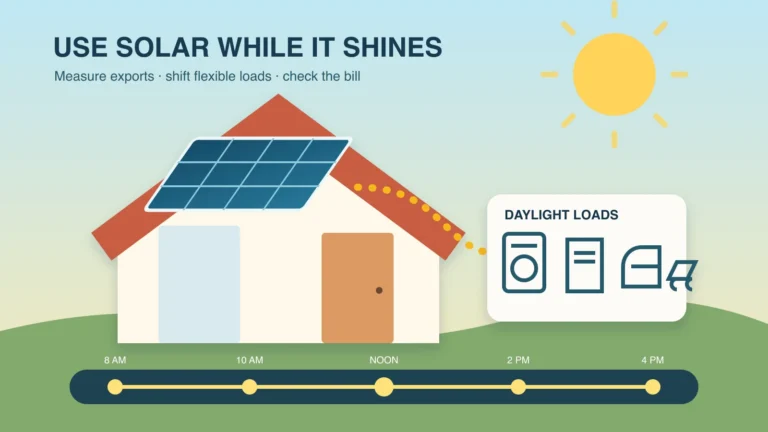
If rooftop solar supplies some daytime heating, value only the electricity actually covered by available generation. It may displace exports as well as imports. The rooftop solar self-consumption guide explains why daytime use is not automatically free and how to compare the import value with forgone export credit.
Installation, servicing and refrigerant work
Installation quality affects comfort, efficiency, drainage, noise and equipment life. Use a properly licensed installer and an appropriately licensed ARC technician for regulated refrigeration and air-conditioning work. Confirm electrical work, refrigerant handling, condensate drainage, outdoor clearance, mounting, noise placement, commissioning and warranty requirements before accepting the job.
Ask for model numbers, heating capacity at relevant cold conditions, the load assessment, circuit or switchboard requirements, controls, warranty documents and maintenance instructions. Do not open refrigerant circuits or electrical equipment yourself. A filter clean that the manual assigns to the householder is different from diagnosis, repair or refrigerant work.
Do not assume an incentive applies nationally
Some state programs may offer upgrades, discounts or finance under particular eligibility and product rules. Those programs can change and do not apply uniformly across Australia. This article therefore does not nationalise NSW or Victorian incentives. Check the current official page for your state, your property, the proposed product and the accredited provider before treating any support as part of a quote.
Compare quotes before incentives and after incentives, and separate purchase cost from estimated running cost. A discounted system that is poorly sized or unsuitable for the building is not a good result.
A practical winter checklist
- Define the occupied rooms and comfort needs, including health constraints.
- Reduce obvious draughts and use curtains while preserving required ventilation.
- Obtain an onsite load assessment before choosing capacity or system type.
- Use the hot, average or cold label zone and compare similar-capacity models.
- Multiply annual heating kWh by your own applicable tariff as an estimate.
- Begin around 18–20°C, then adjust for safe comfort and record operating hours.
- Keep filters and airflow paths clear and heat occupied rooms where the design permits.
- Use licensed installers and ARC-qualified technicians for regulated work.
- Verify any state incentive on the current state page rather than assuming national access.
Official sources
- Australian Government — Heating and cooling
- Australian Government — Winter energy savings
- Energy Rating — Understand the Zoned Energy Rating Label
- YourHome — Heating and cooling
- NSW Climate and Energy Action — Reverse-cycle air conditioners
- NSW Climate and Energy Action — Winter
- Victoria — Choosing the right reverse-cycle air conditioner
Disclosure: Ezion Guide has no affiliate relationship with any retailer, manufacturer, installer, energy provider or government program mentioned here. This general information does not guarantee savings or suitability. Purchase, installation and running costs vary with climate, building, system, use and tariff. Confirm current official guidance, product documents, load calculations, licensing and local eligibility before buying, installing or changing operation.