Reviewed: 11 August 2026 · Written by Jay Jung
There is no universally cheaper tariff. A time-of-use tariff is excellent for a household that can shift load and expensive for one that cannot, and the difference between those two households can be several hundred dollars a year on identical total consumption.
This guide shows how to work out which one you are, using your own data rather than a generic profile.
The two structures, precisely
Flat tariff. One usage rate, all hours. A kilowatt-hour at 7pm costs the same as one at 3am. Your bill is a function of total consumption and nothing else.
Time-of-use tariff. The day is split into periods — typically peak, shoulder and off-peak — each with its own rate. Total consumption still matters, but when you consume changes the bill substantially.
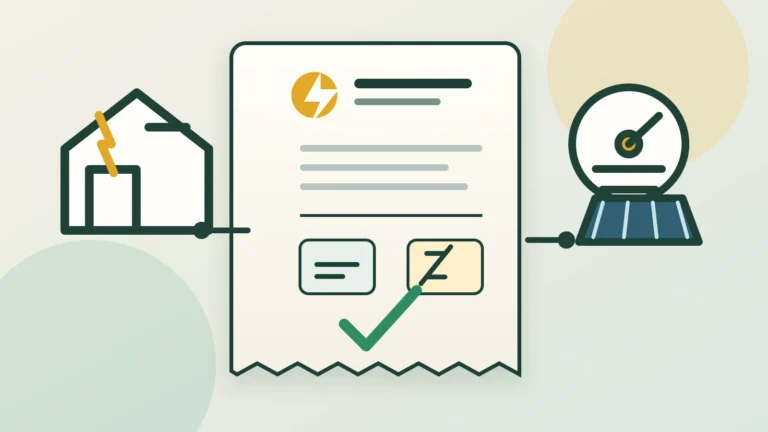
Both sit on top of the same daily supply charge, which does not vary by time and should be included in any comparison. There is a third structure, the demand tariff, which is a different animal again and is covered separately at the end.
The periods are set by your network, not your retailer
This is the detail that breaks most online advice. Peak, shoulder and off-peak windows are defined by your distribution network, so they differ by state and sometimes by area within a state. A “peak” period that runs 2pm–8pm in one network may run 3pm–9pm in another, and weekend definitions differ again.
Some networks have also shifted their definitions in response to daytime solar generation, with the effect that the middle of the day — once shoulder or peak — is now the cheapest window in some areas.
Do not assume. Read the period definitions printed on your own bill or in the plan’s Basic Plan Information Document, which retailers are required to provide.
Step 1: Find out what you actually use, and when
Without interval data this comparison is guesswork. With it, it is arithmetic.
If you have a smart meter, your retailer’s portal or app will show consumption in half-hour or hourly intervals, usually downloadable as a CSV. You can also request your metering data from your retailer directly. Smart Meters in Australia covers access and your rights around installation.
If you do not have a smart meter, you generally cannot be placed on a genuine time-of-use tariff anyway, so the question is moot until one is installed.
With a CSV of interval data, you want one number: the share of your consumption that falls inside the peak window.
Step 2: The rough test
Before doing any spreadsheet work, this heuristic filters most households:
Time-of-use is likely to win if:
- Nobody is home during weekday afternoons
- Your largest loads — dishwasher, washing machine, dryer, pool pump, EV charging — can run on a timer
- You have solar and can move loads into the middle of the day
- You have electric hot water on a controlled load, or can move it off peak
Flat is likely to win if:
- Someone is home all day and the air conditioner runs through the afternoon
- Cooking, laundry and heating are concentrated between 5pm and 9pm and cannot move
- Shift work or care responsibilities make scheduling unrealistic
- Your household is small and total usage is low, so the effort outweighs the saving
The uncomfortable version of this: time-of-use tariffs reward households with the flexibility to schedule their lives around electricity prices. Not every household has that flexibility, and choosing flat is a legitimate answer rather than a failure to optimise.
Step 3: The actual calculation
For a real comparison, take one full billing period of interval data and do this twice — once for a flat offer, once for a time-of-use offer:
- Sort each interval into its rate period using the window definitions from the plan document.
- Multiply each period’s kWh total by that period’s rate.
- Add the supply charge × days in the period.
- Apply any controlled-load usage at its own rate — it is unaffected by the time-of-use structure.
- Compare the two totals.
The official comparison tools do this for you if you upload your bill or provide your NMI: Energy Made Easy for New South Wales, Queensland, South Australia, Tasmania and the ACT, and Victorian Energy Compare for Victoria. Both take no commission and list every offer the retailer must publish. Use them before doing anything by hand — the manual method above is for understanding the result, not for producing it.
The broader comparison method, including discounts and fees, is in How to Compare Electricity Plans in Australia.
Step 4: Test whether you would actually shift the load
The trap in time-of-use is a saving that only exists on paper. Before switching, run the behaviour for two weeks on your current tariff:
- Set the dishwasher to start after the peak window ends
- Run laundry outside peak, on a timer if the machine supports it
- Move the pool pump schedule
- Note how often you failed, and why
If two weeks of deliberate effort produced only partial compliance, model the time-of-use option using your actual shifted pattern, not the ideal one. A tariff that saves money in theory and loses it in practice is the most common bad outcome here.
Solar changes the answer
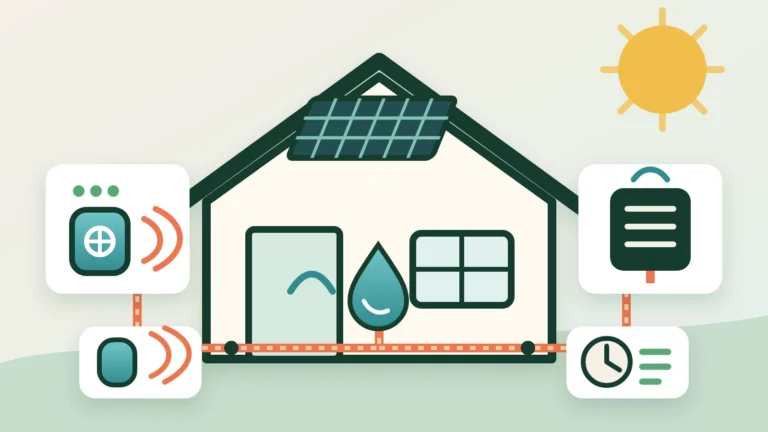
With rooftop solar, the calculation inverts. Feed-in rates have fallen substantially, so exported electricity is worth much less than electricity you avoid buying. That makes self-consumption the goal: run loads while the sun is generating.
Where daytime periods are cheap or shoulder-rated, a time-of-use tariff aligns neatly with solar — you are already shifting load into the middle of the day, and the tariff rewards it. Where your network’s peak window still sits in the late afternoon as generation drops, the picture is more mixed.
See Solar Feed-in Tariffs in Australia for what exports are currently worth, and Home Battery Payback if you are considering storing the surplus instead.
A note on demand tariffs
A demand tariff is not a variant of time-of-use. It adds a charge based on your highest single period of usage — typically the peak half-hour or hour in the billing period — measured in kW.
The behavioural implication is different. Under time-of-use, you shift load out of expensive hours. Under a demand tariff, you stagger simultaneous loads so no single half-hour spikes: air conditioner and oven and dryer sequentially, not together.
Many households are moved onto demand tariffs after a smart meter install or on a new connection without registering the change. If your bill shows a figure in kW rather than only kWh, you are on one. Understanding Your Electricity Bill Line by Line shows where it appears.
Switching tariff type
Changing tariff structure often does not require changing retailer, and is frequently free — though some networks limit how often you can change, and some tariff types require a smart meter.
Ask your retailer two questions:
- Which tariffs are available for my meter and address?
- Is there a cost or a lock-in period for changing?
If the answer is that a better tariff is only available on a different plan, that is a full comparison exercise — see Switching Energy Retailers for the process and the mistakes that cost money.
The short version
- Get your interval data. Without it, this is guesswork.
- Find the share of usage in the peak window.
- Run both offers through Energy Made Easy or Victorian Energy Compare with your real usage.
- Test the load-shifting behaviour for two weeks before committing.
- If your household cannot move load, flat is the right answer and there is nothing to fix.
Part of Cut Your Australian Power Bill: The Complete Home Energy Guide.
Official sources
- Energy Made Easy — Australian Government comparison service
- Australian Energy Regulator — Default Market Offer
- Victorian Energy Compare
- Your distribution network’s published tariff period definitions
Disclosure: Ezion Guide has no affiliate relationship with any energy retailer or comparison service. This is general information, not financial advice. Tariff structures, period definitions and rates change — verify with the sources above.